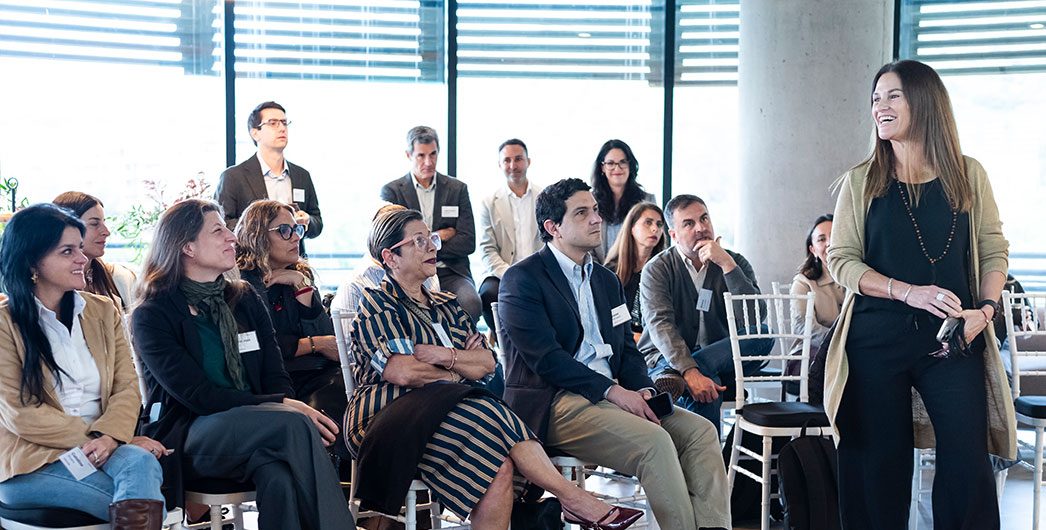
What could Sebastián Piñera, Fernando Montes, and Gabriel Boric possibly have in common? At first glance, very little. One was a businessman and twice President of the Republic; another has been a Jesuit priest for almost six decades; and the third arrived at La Moneda Palace from a generation that sought to leave behind the world of the first two. However, the release this week of three books about them reveals something that connects them.
“Sebastián Piñera Echenique in 50 global voices” It gathers testimonies about the former president;Come and follow me.” It contains Montes's memoirs; and “The Hangover" This is Eugenio Tironi's interpretation of Boric's government. Three exercises that, fundamentally, raise the same question: how to remain true to one's convictions without becoming a prisoner of them?
All three developed well-defined identities. Piñera belonged to the center-right, Montes has been, above all, a Jesuit, and Boric emerged from the Broad Front. But, in decisive moments, they were willing to talk with those who thought differently, to contradict their own allies, and to modify their responses when reality ceased to align with their initial assessment. That is when each of their adaptive capacities comes to the fore, especially necessary when profound transformations undermine the certainties upon which their identity was built. Adapting does not consist of abandoning one's convictions as the winds blow, but rather in discerning what is essential and what must change when the environment changes. The alternative is to turn one's identity into a prison and end up blaming reality because it doesn't behave as one would like.
The book about Piñera brings together fifty figures from diverse backgrounds. Obama and Macron are featured, but so are Lula and José Mujica, and all agree that he was a decisive figure in Chile and Latin America. At the launch, Foreign Minister Francisco Pérez Mackenna recalled that Piñera had quoted Saint Augustine to Lula: “Times are as men make them. Let us be better, and times will be better.” The expression reflects his firm belief in the impact leaders can have, and also his willingness to build consensus with those on the other side.
The most challenging transformation he faced was the social uprising. The paradox is well-known: the middle class, born under the umbrella of liberal reforms and economic growth, raised its voice against the very order that had enabled its progress, feeling that the promise of upward mobility and fair treatment had been broken. Piñera was slow to grasp the phenomenon, but faced with the critical situation posed by the uprising, he accepted reality and opted for a constitutional solution that deviated from his original plan, despite criticism from a significant portion of his own political base. His subsequent decision to join the other former presidents in signing the democratic commitment commemorating the fiftieth anniversary of the coup, even at the cost of reproach from much of the right wing, again demonstrates this willingness to transcend his own political boundaries.
Fernando Montes comes from a different world, though the challenge is similar. He entered the Society of Jesus at fifteen, when it was a closed, hierarchical institution, regulated down to the smallest detail. Then came the Second Vatican Council, the renewal spearheaded by Pedro Arrupe within the Society of Jesus, and a new relationship between the Church and the modern world. Decades later, the Chilean Church itself would go from occupying a central place to being weakened by secularization and abuses. Montes understood early on that being faithful didn't mean preserving all the forms intact, even if that earned him criticism from more conservative sectors. In a 1973 letter, he expressed it this way: “It's not an Amen to the details, it's an Amen to a vocation.”
Andrea Vial, in presenting the book, recalled that founding rector of Alberto Hurtado University who marched with his students down the Alameda when he deemed it just, but who also raised his voice firmly when he felt they were wrong. A priest who moved between worlds that rarely intersect: the elite and the poor, La Victoria and Punta Peuco. Perhaps for that very reason, at the end of the event, he embraced Luis Riveros, the former Grand Master of Freemasonry, that order composed of “strange people,” as Montes had been taught since childhood.
"The Hangover" It addresses the most recent case. Tironi's thesis is that reality changed as soon as Boric arrived at La Moneda Palace, forcing him to abandon the epic of national refounding. The decisive moment was the constitutional plebiscite of September 4, 2022. The 62% who rejected the proposal revealed a Chile different from the one the Broad Front believed it represented: less willing to start anew, more concerned with order, and distanced from the identity-based positions of the Constitutional Convention. Boric could have insisted on his initial interpretation or taken responsibility for that country, and he opted for the latter, broadening his coalition and negotiating reforms different from those promised. In Tironi's most provocative formulation, he would have ended up closer to Aylwin than to Allende, although María José Naudon questioned this comparison when she spoke at the book's presentation.
The former president arrived with a notebook and a folder of papers, and for forty-five minutes he discussed various interpretations of Tironi's work. But he also did something unusual. He acknowledged that his government had failed to recognize the changing social climate in time; he described the retirements as a major mistake; he admitted to the misuse of impeachment proceedings; he stated that he should have formed a more experienced initial cabinet; and he defended the tactical reforms of his administration. This is no small feat for someone who promised to surpass the previous generation.
However, it would be a mistake to turn these books into a collective canonization. All three made mistakes, and each reader can judge whether they adapted too much, too little, or too late. What cannot be denied is that they were criticized by their peers for straying from the expected script. And that is the best reflection of someone who, possessing an identity, convictions, and a sense of purpose, can also go beyond their own boundaries. Facing reality as it is, and not as one would like it to be, does not mean submitting to it or giving up on transforming it. It means understanding and accepting it before attempting to do so.
There is one final striking element. All three rooms were full, and their audiences were more diverse than expected, yet the different perspectives and opinions didn't lead anyone to entrench themselves in their positions. Why is this willingness to listen confined to these spaces, while in the public sphere, insults and slogans prevail? Perhaps part of the answer lies in social media, which rewards certainty and loyalty to the group, while a book compels us to pause, consider nuances, and look at things from multiple angles.
Any good observer realizes that Chilean society is less polarized than the public discourse that represents it, and that is why leaders are needed whose identity and convictions do not prevent them from looking, listening, learning and adapting; leaders capable of crossing their borders and, even more difficult, returning to talk with their own people about what they found on the other side.